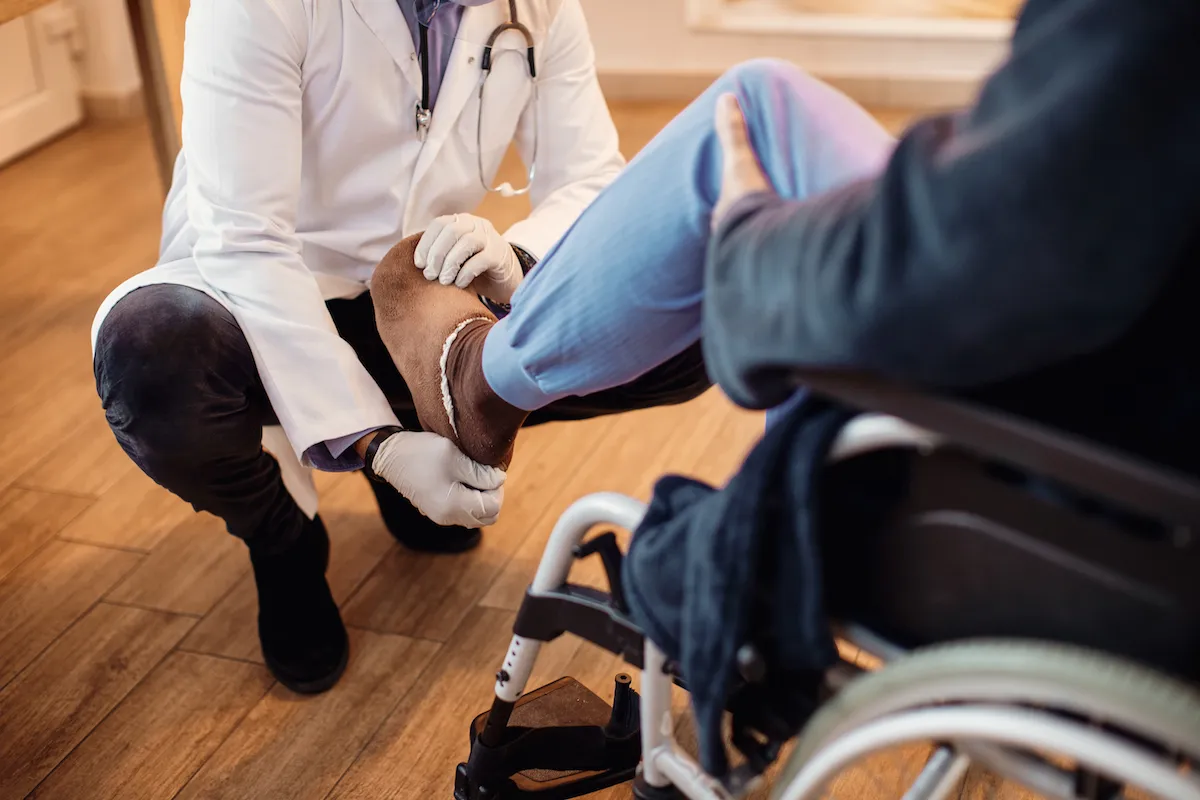
Wounds That Will Not Heal
A sore on the foot or leg that will not heal is often a blood flow problem. At FCCI, wound care specialists and vascular cardiologists work together under one roof to find the blockage and help the wound heal.
Why some wounds stall
Skin needs a steady supply of blood to heal. If arteries in the leg are blocked, a small cut, blister or pressure spot can sit open for weeks. That is why FCCI's vascular lab lists non-healing foot wounds as a reason to test for PAD.
People with diabetes are at higher risk, because diabetes can affect both blood vessels and feeling in the feet, so a sore may go unnoticed.
For a wound that will not close, FCCI keeps wound care specialists and board-certified cardiologists under one roof. Testing checks for blocked arteries, and if flow is the problem, a cardiologist builds a plan to restore it.
To get the most from an appointment about a wound that will not close, write a few notes first: your symptoms, how long they have been going on, and what helps. Bring every medicine you take, including supplements, plus your insurance card and ID.
Wounds FCCI's specialists diagnose
FCCI's Wound Care Specialists are experienced in diagnosing:
- Diabetic foot ulcers
- Arterial ulcers
- Venous ulcers
- Pressure ulcers
- Traumatic wounds
- Surgical wounds
- Other leg and foot wounds that stay open too long
Wounds come in many types, and the right care depends on the cause. A venous ulcer from weak vein valves is handled differently from an arterial ulcer caused by blocked arteries, and a diabetic foot ulcer brings its own needs. That is why the first step is a careful diagnosis, often with vascular testing.
Ready to talk about a wound that will not close? The main line is 904.493.3333, Orange Park is 904.644.0092 and Palatka is 386.325.2836. Save personal health details for the phone call or your visit rather than an online form.
Coverage for a wound that will not close: FCCI takes Medicare, Tricare, Blue Cross Blue Shield, Aetna, Cigna, United Healthcare, Humana (with some exceptions) and many other plans. Not sure about yours? The front desk will check when you call.

Treatments offered
FCCI provides a range of treatments, including hyperbaric oxygen treatment, skin grafts, amniotic membrane therapies, vascular testing, early endovascular intervention and preventative surgery. The goal of each personalized plan is to relieve pain, decrease recovery time and heal the wound.
Dr. David Swain, DPM, CWSP, a podiatric surgeon specializing in wound care and limb salvage, has been part of FCCI since 2013.
If a wound that will not close calls for restoring flow, FCCI's outpatient cath lab can map the leg arteries with peripheral angiography and open them with atherectomy devices, balloons and/or stents. Calcified blockages may be treated with Shockwave Medical's lithoplasty system.
After testing for a wound that will not close, your doctor goes over the results with you and sets a personal plan. It might be walking and medicine, or it might include a procedure.
Do not wait on a wound
Check your feet every day if you have diabetes or PAD. If a sore is not clearly getting better, or it turns dark, smells, or the skin around it gets red and hot, call your doctor. To book with FCCI, call 904.493.3333. If a foot suddenly turns cold, pale or numb, call 911.
A few minutes of notes helps the team understand a wound that will not close. List what you feel, when it started and what changes it, then bring your medicines (supplements too), insurance card and photo ID.
If a wound that will not close leads to a procedure, follow the food and medicine directions you are given. People with diabetes get specific instructions about their medicines.
On the wound side of a wound that will not close, Dr. David Swain brings podiatric surgery focused on wound care and limb salvage. He is board certified in Limb Preservation and Salvage and volunteers with A Leg Up: The Jacksonville Amputation Support Group.
Talk with a specialist.
New patients are welcome. Call 904.493.3333, Mon to Fri, 8am to 5pm, or request a visit online.
Why won't the wound on my foot heal?
One common reason is poor blood flow from blocked leg arteries. Diabetes, pressure and infection also play a role. FCCI can test your circulation and treat the wound together.
Does FCCI treat diabetic foot ulcers?
Yes. FCCI's Wound Care Specialists diagnose diabetic foot ulcers, arterial ulcers, venous ulcers, pressure ulcers and other non-healing wounds of the legs and feet.
What is hyperbaric oxygen treatment?
It is one of the wound treatments FCCI offers. Your care team will explain whether it fits your wound and your health.