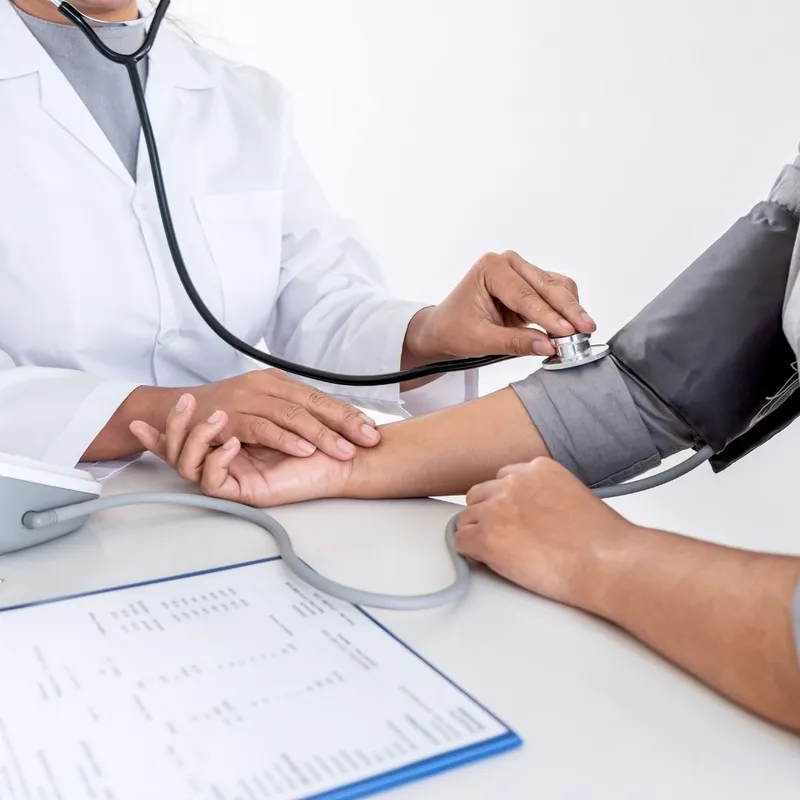
If your calves, thighs or hips ache, cramp or feel heavy when you walk, and the feeling fades a few minutes after you stop, your leg muscles may not be getting enough blood. One common reason is peripheral artery disease, or PAD. The good news: it can be checked with a painless ultrasound, and there are real treatment options in Jacksonville.
Why muscles complain when you walk
Muscles need more oxygen when they work. Blood carries that oxygen through your arteries. When plaque builds up inside the leg arteries, the pipe gets narrower. At rest, a narrowed artery may still deliver enough. When you walk, demand rises, supply cannot keep up, and the muscle starts to hurt.
Stop and rest, and the demand drops again. That on-and-off pattern is one of the reasons doctors take walking pain seriously. It is your body pointing at the problem.
What it can feel like
People describe it in different ways. Some feel a cramp. Others feel a deep ache, burning, heaviness or simple tiredness in the legs. It may happen on one side or both. Some people quietly start walking less and never connect the dots.
- Cramping in the calf, thigh or hip during walking
- Pain that eases within minutes of rest
- Needing to stop at the same distance each time
- Legs that feel weak or tired on stairs or hills
Other things that can cause leg pain
Not all leg pain is about arteries. Arthritis, nerve problems from the back, muscle strain and vein issues can all cause pain. Vein problems often bring swelling, heaviness or varicose veins and may feel worse after standing. That is exactly why testing beats guessing.
At FCCI's accredited Non-Invasive Vascular Lab, the only lab in Jacksonville solely dedicated to vascular testing, your doctor can order tests for both arteries and veins.
How PAD is checked
A peripheral arterial duplex scan uses ultrasound to find narrow or blocked arteries in the legs. FCCI notes it usually takes about two hours, and you avoid food, drinks, tobacco and caffeine for seven hours beforehand. A lower extremity physiologic study can also show whether PAD is present and which vessels are affected.
There are no needles and no dye. You lie down, a technologist uses gel and a handheld probe, and your doctor reviews the results with you afterward.
What happens if you have PAD
Your plan depends on how much blood flow is reduced and how much it affects your life. Many people start with walking programs, quitting tobacco and medicines. When flow needs to be restored, FCCI's outpatient cath lab can open arteries with balloons, stents and atherectomy devices, usually through a tiny incision in the wrist or groin.
The same plaque that narrows leg arteries can affect the heart, so your FCCI cardiologist looks at the bigger picture too.
Write it down before your visit
Bring notes: how far you can walk before pain starts, where it hurts, how long rest takes to help, and when it began. Bring your medicine list. Tell your doctor if you have diabetes, smoke or have heart disease, since those raise PAD risk.
Where the testing happens
Leg artery scans are done at FCCI's accredited Non-Invasive Vascular Lab, the only lab in Jacksonville that does nothing but vascular testing. There are no needles, dye or radiation, just ultrasound and blood pressure cuffs, and the staff will tell you ahead of time if your study needs that seven hour fast.
Making the call
Your walking notes are the most useful thing you can bring, so keep them in your pocket along with your medicine list, insurance card and ID. A relative is welcome to come and help remember what the doctor says.
The main office is 904.493.3333. Orange Park patients can call 904.644.0092 and Palatka patients 386.325.2836, or you can start on the booking page. Keep health details for the phone or the exam room rather than a web form. This post is general reading, not medical advice, and leg pain that comes on suddenly or severely is a 911 call.